Showing posts with label Spain. Show all posts

Friday, November 21, 2014

Descubriendo Córdoba, España


Hace unos días tuve la oportunidad de conocer una preciosa ciudad del sur de España, Córdoba (no confundir con la de Argentina). Me encantó porque paseando por sus estrechas calles puedes respirar la historia de muchos siglos. Disfruté del rico salmorejo cordobés todos los días y dormí en una increíble casa con patio que tan famosas son en la ciudad. Para mostraros bien el look que llevé para un día deintenso turismo, os enseño fotos de diferentes momentos del día. Estrené mis nuevos monkstrap o zapatos con hebilla de los que me enamoré perdidamente en Topshop, mis jeans color cereza de Penneys y mi jersey negro de cuello cisne de Mango, un básico en la mayoría de mis outfits. Si nunca habéis estado en Córdoba, no tardéis en reservar un finde.


A few days ago I had the opportunity to visit one of the most beautiful town in southern Spain: Córdoba (not to be confused with that one in Argentina). I loved it because while walking through its narrow streets you can see the history of many centuries. I enjoyed every day the delicious Cordovan gazpacho and slept in an amazing house with a yard that are so famous in this town. To show either the look I wore for an intense tourism day, I show pictures of different moments of the day. I wore for the first time my new monkstrap or buckle shoes which I fell madly in love with in Topshop, my cherry-jeans from Penneys and my black turtleneck sweater from Mango, a staple in most of my outfits. If you've never been to Cordoba, don't take so long to book a weekend there.

Tuesday, November 18, 2014

En Toledo visitando a El Greco


La semana pasada me escapé a España y no me quise perder la exposición que la ciudad de Toledo le ha dedicado a El Greco con motivo de los 400 años de su muerte. Aunque el sol brillaba, el invierno ya apretaba en esta bonita ciudad del centro de España y nada mejor que las superposiciones que tanto adoro. Camisa jean vintage, jersey-vestido de H&M, bufanda multicolor de Adolfo Domínguez para dar vida al negro del abrigo y los leggings. Y para caminar en un día de turismo nada mejor que mis adorados botines que compré en Topshop cuando estuve en Dublín. Creo que se van a convertir en mi prenda fetiche de esta temporada.


Last week I travelled to Spain and I couldn't miss the chance to visit the exposition that Toledo has devoted to El Greco on the occasion of the 400th anniversary of his death. Although the sun was shining, the winter already arrived to this pretty town in the centre of Spain and nothing better to explore the city than an outfit with overlays. A vintage jean shirt, a long jersey from H&M,a beautiful colourful scarf by Adolfo Domínguez to give a little bit of light to the black coat and leggings. For walking in a day of sightseeing, nothing like my beloved boots I bought in Topshop in Dublin. I think it is going to become my favorite accessory this season.

Friday, May 02, 2014

De paseo por Triana


La primavera lo invade todo. El aire, la luz, las calles, el reir de la gente. La primavera en Sevilla se hace onmipresente e imprescindible. Y qué dificil es alejarse de esta adictiva ciudad. Recuerdos de mis pasadas vacaciones.
Falda: vintage / Camiseta y bailarinas: Zara / Chaqueta: Mango / Collar: Blanco
 
Spring is everywhere. In the air, in the light, in the streets, in the people laughing. Spring in Seville is everywhere and essential. It's hard to leave this addictive place. Memories of my holidays.
Skirt: vintage / Shirt and ballerinas: Zara / Jacket: Mango / Necklace: Blanco

Tuesday, April 29, 2014

Easter in Sevilla- Jueves Santo


Sevilla se convierte en un escenario solemne donde el murmullo se transforma en silencio al paso de una cofradía, el olor de los naranjos en flor es eclipsado por el aroma del incienso, el duelo se transforman en lágrimas de alegría, los amigos se ocultan bajo túnicas y antifaces de nazarenos y desaparecen de la mundana cotidianidad por unas horas. Es como un viaje en el tiempo y en el espacio que no deja indiferente a nadie con independencia de sus creencias o procedencia. Sin ninguna duda, Vivir la Semana Santa de Sevilla es una de esas cosas imprescindibles que todos deberíamos experimentar alguna vez en nuestra vida.
Vestido: Mango / Sandalias: Zara 

Sevilla turns into a solemn theater where the murmur becomes silent, the smell of the orange blossoms is overshadowed by the smell of the incense, mourning turned into tears of joy, friends are hidden under Nazarenes robes and masks and disappear of the daily life for a few hours. It's a journey through time and space that leaves no one indifferent regardless of its beliefs or background. Undoubtedly, Easter in Seville is one of those essential things that everyone should experience once in its life.
Dress: Mango / Sandals: Zara

Friday, February 14, 2014

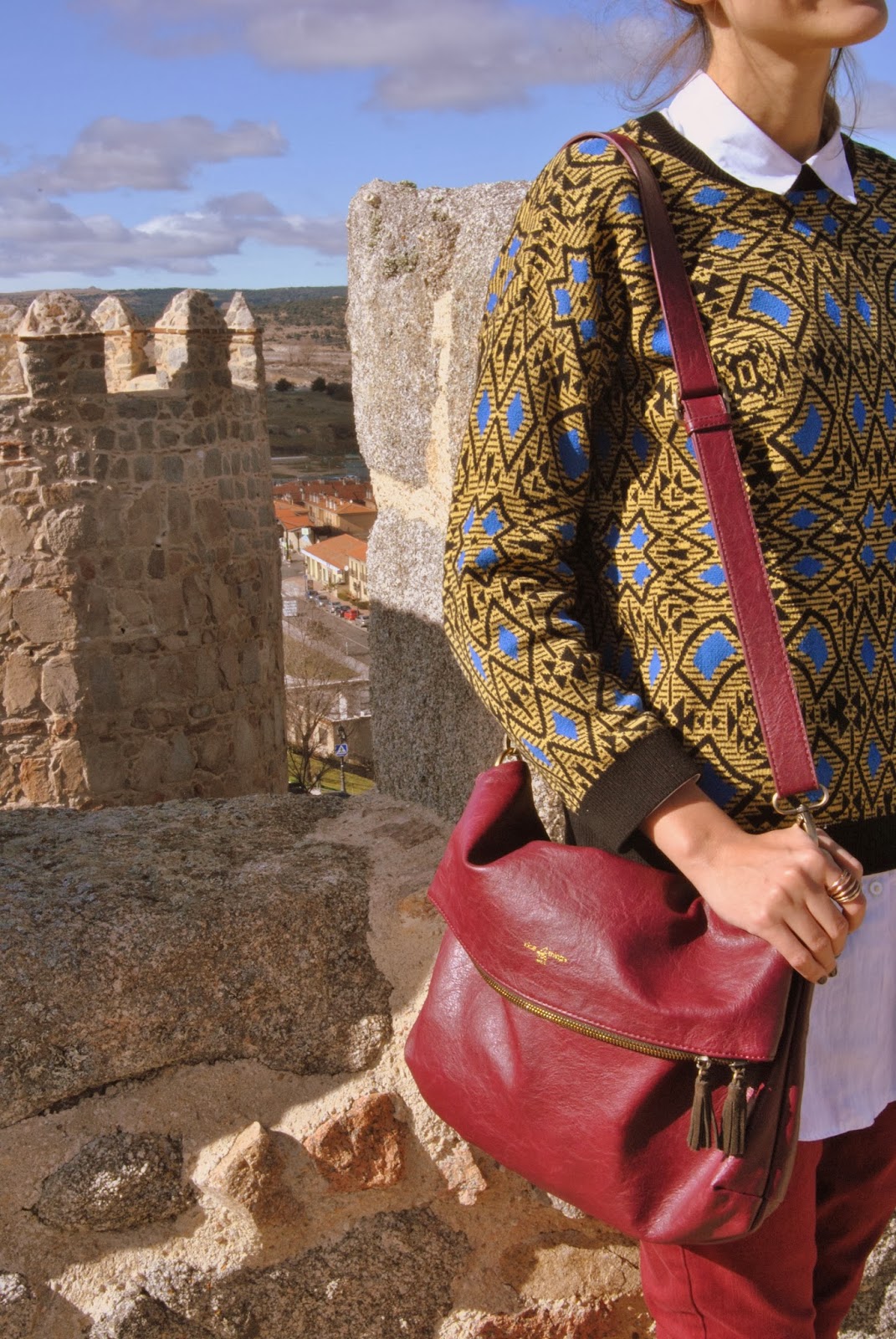
Ávila, a trip to the Middle Age


El pasado fin de semana me escapé de nuevo a España y aproveché para visitar una pequeña y maravillosa ciudad castellana: Ávila. Esta villa amurallada es un viaje en el tiempo. Pasear por sus calles te permite imaginar cómo era la vida en esta ciudad en la época de los Reyes Católicos o de Santa Teresa de Jesús. Por eso no es de extrañar que su casco histórico medieval, en excelente estado de conservación, fuese declarado Patrimonio de la Humanidad en 1985. Si vais a Ávila os recomiendo tomar algo en el patio del Palacio de los Velada, reconvertido en hotel. Una maravilla!
Jersey: Zara / Pitillos: H&M/ Bolso: Nice things / Botines: vintage / Anillo: Mango


Last weekend I went back to Spain and visited a small wonderful and not enough well-known Spanish town: Ávila. This walled town is a journey in the History of Spain. Strolling through the streets allows you to imagine how life was supposed to be in this city at the time of the Catholic Monarchs or Santa Teresa de Jesus. Therfore, it is not surprising that its medieval Old Town, in excellent conditions, was declared a World Heritage Site in 1985. If you are going to Ávila, you cannot miss to have a drink in the courtyard of the Palacio de los Velada, now turned into a cozy hotel! 

Jersey: Zara / Skinnies : H&M / Bag: Nice things / Boots: Vintage / Ring: Mango

Monday, July 08, 2013

Triana pura


"Barrio de agua y arcilla,
Triana puente y aparte,
Hierbabuena, soleás y seguiriyas."

Difícilmente traducible, Triana es la vieja guarda y arrabal de Sevilla, y no más. Ubicado en la otra orilla del Guadalquivir está, y siempre estuvo, el más popular de todos los barrios de la ciudad hispalense que, posiblemente, tomara su nombre del emperador Trajano (Traianus) nacido no muy lejos de allí. Fue tradicionalmente un barrio de marineros y alfareros, famosa por sus toreros, cantaores y bailaores de flamenco. A la sombra de las estrechas calles Alfarería y Antillanos Campos, los maestros alfareros hoy día siguen dándose una réplica cromática con las fachadas de sus talleres donde geometría y botánica se dan la mano en un juego visual de colores y formas. Un barrio tradicional, sí; pero, más allá de su costumbrismo, su universalidad ha dado nombre desde a pueblos y ciudades a este y al otro lado del Atlántico, hasta a un satélite de la NASA. Así, en su siesta al calor de la tarde, Triana sigue siendo solamente un barrio con las señas de identidad de todo un imperio.

Sevilla y Triana
Y el río en medio:
así es tan de mis gustos
tu ingrato dueño.
                                               Lope de Vega (S. XVI)

Hardly translatable, Triana is the old defense and suburb of Seville, and no more than that. Placed in the other shore of Guadalquivir river we find, as was ever there, the most popular of all the neighbourhoods of the Hispalensis city that, likely, took its name from the Emperor Trajan (Traianus), born not far from there. Traditionally, it was a quarter of sailors and potters, famous by its bullfighters, flamenco singers and dancers. In the shadow of the narrow Alfarería (Pottery) and Antillanos Campos streets, the master potters, nowadays, keep giving response to each other with the chromatic facades of their workshops where geometry and botanic meet in a visual game of forms and colours. A traditional quarter, yes; but, beyond its regionalism, its universality has given its name to towns on this and the other side of the Atlantic ocean to even a NASA’s satellite. Hence, on its siesta under the heat of the afternoon, Triana is still being no more than a suburb but with the symbols of identity of an empire. 

Wednesday, July 03, 2013

Sevilla a tus pies


El pasado fin de semana estuvimos en Sevilla, la que fue en el siglo XVI lo que hoy es Nueva York: el centro neurálgico del comercio global por donde fluían en ambos sentidos no sólo mercancías y personas, sino ideas, corrientes y costumbres entre Europa y el Nuevo Mundo. Su puerto fluvial en el Guadalquivir tuvo el monopolio absoluto del comercio con las Indias Occidentales. No obstante, antes y después del siglo de oro español, la capital andaluza tuvo su historia con todo tipo de culturas – tartesos, fenicios, romanos, árabes… - que convivieron y se sucedieron unas a otras otorgándole a la Sevilla de hoy día una esencia armoniosa, destilada e indisoluble en la que se diluyen los siglos de guerras y enfrentamientos entre los pueblos que la habitaron; parece que todos la soñaron de un mismo modo, que todos la quisieron con el mismo calor.
Las fotos están tomadas desde las sinuosas y sugerentes terrazas del Metropol Parasol, del arquitecto alemán Jürgen Mayer, que ofrecen al visitante una perspectiva moderna y contemporánea de una de las ciudades más típicamente españolas: tradición, sol, toros, flamenco y tapas. El edificio, popularmente conocido por su forma como “las setas”, engloba, en una misma estructura, la terraza en lo alto, una plaza pública para celebrar conciertos y otras foros sociales, un mercado de abastos a nivel de la calle y un museo-antiquarium en el subsuelo que conserva los restos de ruinas romanas y mozárabes encontrados en el mismo centro de la ciudad. Ver la ciudad tendida a tus pies no puede sino hacerte recordar la canción: “Sevilla tiene un color especial, Sevilla sigue teniendo su gente, me sigue oliendo a azahar…”.

We spent last weekend in Seville, which during the XVI Century was what nowadays would be New York: the nerve centre of global trade, the spot where not only merchandises and people, but also ideas, trends and customs were flowing through, both ways, between Europe and New World. Its fluvial harbour in the Guadalquivir river had the absolute monopoly of trade with the West Indies. Nevertheless, prior to and after the Spanish Golden Age, the History of the Andalucian capital has flirted with all kind of different cultures – Tartessos, Phoenicians, Romans, Arabs… - who coexisted and settled the city one after another providing the nowadays Seville with an harmonious, distilled and indissoluble essence in which centuries of wars and conflicts between people who inhabited it are being blurred, it seems that all of them dreamed of it in the same way, all of them loved it with the same passion. Pictures were taken from the winding and suggestive terraces of Metropol Parasol, a masterpiece of the German architect Jürgen Mayer, offering to its visitor a modern and contemporary 360º view of one of the most typical Spanish cities ever: tradition, sun, bullfights, flamenco and tapas. The building, better known as “las setas” (the mushrooms) by its form, encompasses, within its whole structure, the terraces and bars at its peak, a market in the ground floor, a public square which serves to celebrate concerts and other social forums on top of the market and, moreover, an antiquarium-museum in its basement which preserves Roman and Mozarab ruins found out at that point in the very centre of the city. Overlooking the city beneath your feet can no other than remembering the song: “Sevilla tiene un color especial, Sevilla sigue teniendo su gente, me sigue oliendo a azahar…”.